Discovering pests on your beloved plants feels like a violation. You've watered them, given them light, fed them—and then you notice tiny insects, sticky residue, or damaged leaves. The panic sets in: "Will my plant survive?"
Good news: most plant pest and disease issues are easily prevented and treated if caught early. The key is understanding which problems to watch for, recognizing early signs, and knowing when and how to intervene. In the UAE's warm, dry climate, certain pests thrive year-round, making vigilance essential.
Prevention: Your First Line of Defense
The best approach to plant health is prevention. A plant maintained in optimal conditions with proper care rarely succumbs to pests or disease.
Prevention Strategies
- Proper watering: Overwatering creates conditions fungi and root pathogens love. Water properly—wet soil dries before watering again.
- Good air circulation: Space plants appropriately and avoid crowding. Air movement prevents fungal spores from settling on leaves.
- Consistent humidity: For tropical plants, group them together to maintain microclimate humidity. Mist occasionally to prevent pest infestations.
- Appropriate fertilization: Overfed plants develop soft, weak growth attractive to pests. Use Folikraft products at recommended rates.
- Clean environment: Remove dead leaves promptly. Don't let fallen leaves collect on soil—they harbor pests and disease spores.
- Isolation of new plants: Keep newly purchased plants separated for 2-3 weeks. Monitor for hidden pests before introducing to your collection.
- Regular inspection: Check plants weekly, especially undersides of leaves where pests hide. Early detection prevents outbreaks.
Common Indoor Plant Pests
Mealybugs
Appearance: Tiny white cotton-like clusters on stems and leaves. Look like white fuzz at first glance.
Damage: Sap-feeding insects that weaken plants. Produce sticky honeydew promoting fungal sooty mold. Severe infestations stunt growth and kill leaves.
Prevention: Isolate infested plants immediately. Spray surrounding plants with neem oil weekly as preventive measure.
Treatment: Remove visible clusters with cotton swabs dipped in rubbing alcohol. Spray entire plant (especially leaf undersides) with Folikraft Ultimate Bug Killer. Repeat every 7-10 days for 3-4 treatments. Each spray breaks the pest's life cycle at different stages.
Spider Mites
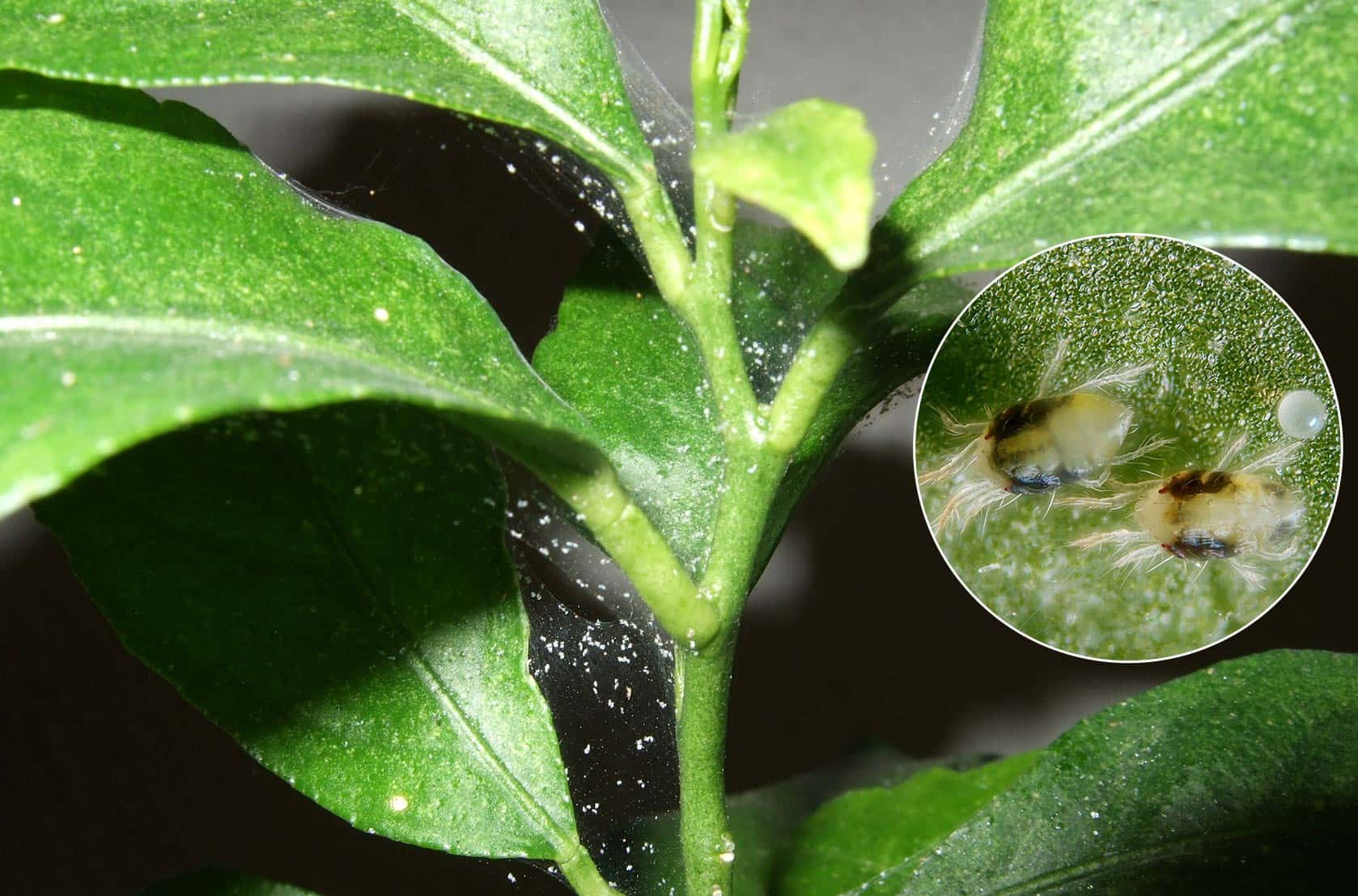
Appearance: Nearly invisible to the naked eye. Look for fine webbing on leaves and stems. Infested leaves appear stippled with tiny yellow dots.
Damage: Extremely rapid reproduction. What starts as a few mites becomes hundreds in days. Plants wilt and leaves fall despite adequate watering.
Prevention: Mist plants regularly. Spider mites thrive in hot, dry conditions. Increasing humidity deters them dramatically.
Treatment: Spray with insecticidal soap or Folikraft Ultimate Bug Killer weekly. Focus on leaf undersides where mites concentrate. Severe infestations may require 4-6 treatments. Consider quarantining the plant away from others.
Scale Insects
Appearance: Brown, oval bumps on stems and leaf veins. Look like plant growths at first—they're actually armored insects.
Damage: Slow-acting but persistent. Plants gradually weaken. Scale infestations can take months to notice and years to fully eliminate.
Prevention: Regular inspection catches scale before it spreads. Isolate infested plants immediately from others.
Treatment: Scrape off visible scale with a soft brush or cloth. Spray with horticultural oil or neem oil weekly for 4-6 weeks. Don't give up—scale requires persistence but responds to consistent treatment.
Thrips
Appearance: Tiny elongated insects (1-2mm). Produce silvery streaks on leaves where they've fed.
Damage: Cause stippling and streaking on leaves and flowers. Deformed blooms and discolored foliage. More common on flowering plants.
Prevention: Blue sticky traps positioned near plants catch thrips early. Monitor flowering plants closely.
Treatment: Spray with Folikraft Ultimate Bug Killer. Repeat weekly for 3-4 weeks. Thrips are mobile—thorough coverage is essential.
Common Plant Diseases
Powdery Mildew
Appearance: White powder on leaves, stems, and flowers—looks like someone dusted the plant with flour.
Conditions that encourage it: Low humidity, poor air circulation, moderate temperatures (18-24°C)—oddly, it's common in air-conditioned homes.
Prevention: Ensure good air circulation. Avoid overhead watering. Space plants appropriately. Increase air flow with fans.
Treatment: Remove severely affected leaves. Spray with sulfur-based fungicide or neem oil weekly for 2-3 weeks. Affected leaves rarely recover—removal speeds recovery.
Leaf Spot Diseases (Fungal)
Appearance: Brown or black spots with yellowing halos on leaves. Spots may have concentric rings. Eventually spots merge and entire leaves yellow and fall.
Conditions that encourage it: High humidity combined with poor air circulation. Wet foliage (from overhead watering) at night.
Prevention: Water at soil level, never overhead. Ensure leaves dry quickly. Remove fallen leaves promptly. Don't crowd plants.
Treatment: Remove all spotted leaves immediately. Spray remaining foliage with copper fungicide or sulfur spray weekly. Change watering practices to prevent recurrence.
Root Rot (Fungal)
Appearance: Mushy stems and roots. Foul soil smell. Wilting despite wet soil. Leaves yellow and fall.
Conditions that encourage it: Waterlogged soil. Poor drainage. Overwatering in cool conditions.
Prevention: Use well-draining soil. Ensure pots have drainage holes. Water only when soil dries between waterings. Don't let plants sit in water.
Treatment: Remove plant from pot. Trim away all mushy, dark roots. Repot in fresh, dry soil. Hold off watering for 5-7 days. Resume careful watering afterward. Many root-rotted plants cannot be saved—prevention is critical.
Yellowing Leaves (Various Causes)
Causes: Nutrient deficiency (especially nitrogen, magnesium, iron), overwatering, poor drainage, pH imbalance, pests, or disease.
Diagnosis: Check soil moisture first—most yellowing comes from watering issues. Check for pests on leaf undersides. If no obvious cause, it's likely nutrient deficiency.
Treatment: If wet soil, stop watering and improve drainage. If dry soil, water properly. If no soil issue, feed with Folikraft Indoor Plant Food—balanced nutrition resolves most nutrient-related yellowing within 2-3 weeks. If pH-related, yellowing occurs between leaf veins while veins stay green—adjust pH toward neutral with sulfur (acidifying) or lime (alkalizing) depending on current pH.
⚠️ Pest Outbreak Protocol
If you discover a severe infestation: (1) Isolate the plant immediately from others. (2) Remove damaged leaves and debris. (3) Spray thoroughly with appropriate treatment, covering all surfaces including pot exterior and surrounding soil. (4) Repeat every 7-10 days for minimum 3 treatments. (5) Don't return plant to its original location for 4-6 weeks. (6) Monitor surrounding plants closely for 2-3 weeks for signs of spread.
Treatment Products and Methods
Organic and Natural Options
- Folikraft Ultimate Bug Killer: Proven effective against mealybugs, spider mites, thrips, and scale. Organic formulation safe for homes with children and pets. Apply weekly until infestation clears.
- Neem Oil: Natural oil from neem tree seeds. Affects insect life cycles and prevents reproduction. Works on most soft-bodied insects. Apply weekly for 3-4 weeks.
- Insecticidal Soap: Potassium salts of fatty acids. Effective against mealybugs, spider mites, thrips. Low toxicity to humans. Requires frequent application.
- Sulfur Dust or Spray: Effective fungicide for powdery mildew and some leaf spot diseases. Don't use on sulfur-sensitive plants (check before applying). Apply weekly until disease clears.
- Copper Fungicide: Broad-spectrum fungicide for leaf spots, powdery mildew, and some bacterial diseases. Effective but can accumulate in soil—use judiciously.
- Horticultural Oil: Smothers soft-bodied insects and their eggs. Safe for most plants but check first. Apply in evening to prevent leaf burn.
Non-Chemical Methods
- Manual removal: For scale and mealybugs, carefully scrape off with soft brush. Labor-intensive but chemical-free.
- Isolation and quarantine: Separate infested plants from others for 4-6 weeks minimum. Prevents spread.
- Leaf shower: Spray infested plants under strong water stream to physically remove pests. Works for spider mites and other soft-bodied insects. Do this daily for 3-4 days.
- Sticky traps: Blue and yellow sticky cards attract and trap flying insects. Place near affected plants. Monitor traps daily—they indicate pest activity levels.
When to Accept Defeat
Sometimes a plant is too far gone to save. Severe infestations involving multiple pest species, widespread disease on critical organs, or root rot affecting the entire root system may be unrecoverable. Rather than spending months attempting rescue on a dying plant, consider:
- Propagating healthy leaves or stems to create new plants (genetic preservation)
- Composting the failed plant
- Starting fresh with a healthy specimen and better care practices
This isn't giving up—it's making space for healthier plants and preventing pest spread to your entire collection.
Integrated Pest Management (IPM) Approach
Professional growers use IPM—combining prevention, monitoring, and targeted treatment:
- Prevention first: Optimal care, good hygiene, proper watering prevent most problems
- Monitoring: Weekly inspections catch problems early when treatment is easiest
- Early intervention: At first signs of problems, remove affected parts and treat immediately
- Escalation: Only use stronger treatments if initial measures fail
- Persistence: Complete treatment courses—don't stop after one application even if problems seem resolved
Final Thoughts
Plant pests and diseases are challenges every gardener faces. They're not failures—they're learning opportunities. By maintaining vigilance, keeping plants healthy through proper care, and responding quickly to problems with appropriate treatments, you'll develop the intuition to manage these issues confidently. Your plants will thrive, and you'll enjoy the rewarding process of nurturing them through challenges.